Gum
Recession
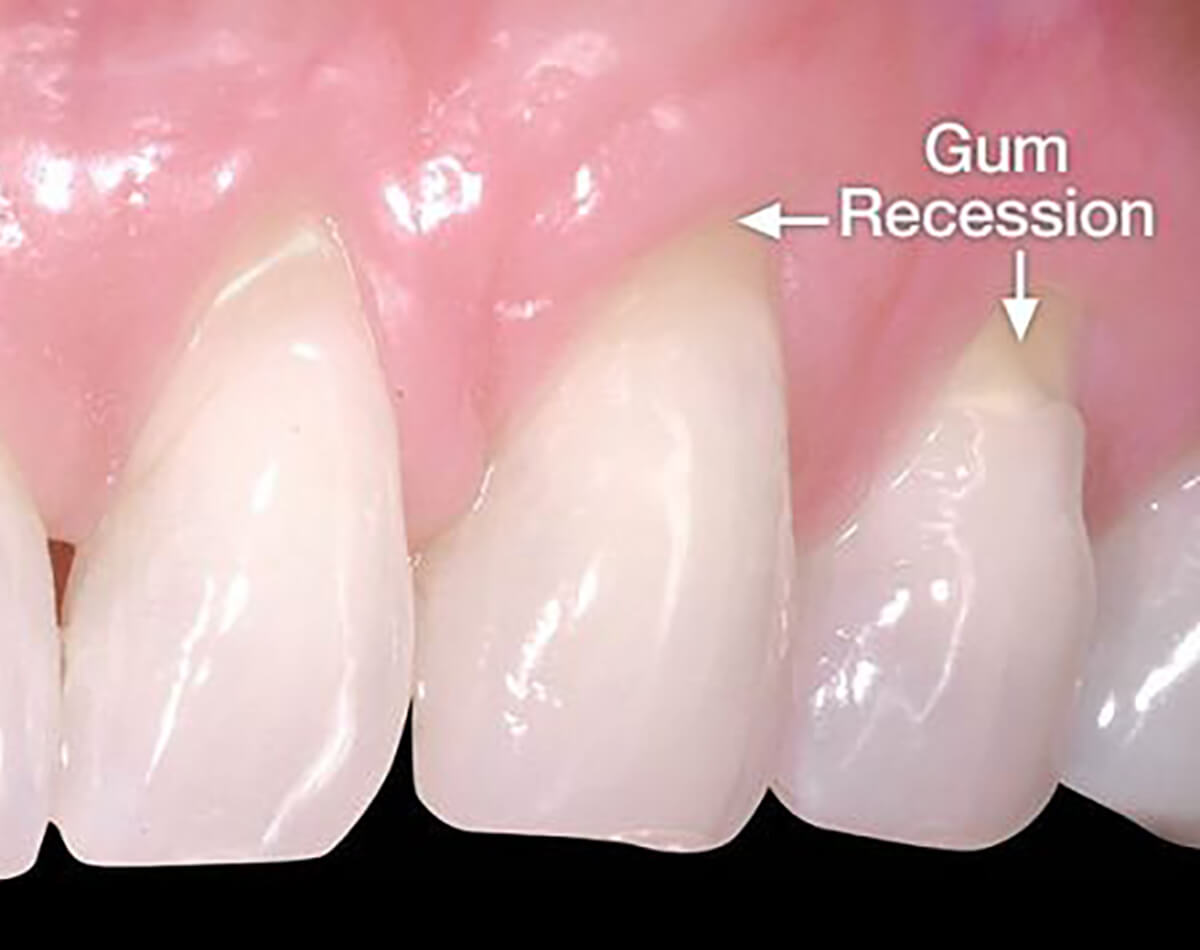
Receded gums can be unsightly, but can also lead to other dental problems.
Receded gum is often painless, although it can cause tooth sensitivity to cold or hot temperature and limit the enjoyment of cold foods and drinks. Receded gums can cause erosion or wearing away of your tooth roots and compromise the foundation of the teeth.
Gum recession:
what is it?
Causes of gum recession
Gum recession can be caused by a number of factors:
- Genetics – You may have naturally thin gum (called tin biotype) which makes it prone to receding.
- Aggressive or incorrect tooth brushing, or using a hard brush.
- Tooth grinding or bruxism (awake or usually during your sleep).
- Improper positioning or alignment of your teeth.
- Traumatic injury or tooth movement.
- Gum disease or infection (periodontal disease often caused by poor oral hygiene or smoking) can also lead to gum recession, as well as recession of the supporting ligament and bone of the teeth.
Sometimes, diseased gums do not show recession because they are inflamed and slightly swollen, but after effective management of gum disease, recession may take place.
How can we treat gum recession?
There is no need to be ashamed or self-conscious about gum problems. At Complete Implant and Sedation Dentistry, we can help restore your gum health, and where suitable, provide the option of restoring your missing or receded gum (gingiva).
Receded gum can often be treated with a gum grafting or repositioning procedure. This is a type of “periodontal plastic surgery” or “perio-plastic surgery”, with the purpose of rebuilding or modifying the gum tissue and position, into an aesthetically and functionally favourable position and shape.
Gum graft procedures may be used to restore and rejuvenate receded or aged gum, cover unsightly or sensitive exposed tooth root surfaces, thicken weak and delicate gum, and augment thin or missing tissue around dental implants.
Receded gum may be reversed by:
- Moving the gum back to a healthy position (called gum rejuvenation or gingival repositioning), often in combination with a wound healing or strengthening substance (like collagen or PRF). This can often be done without opening the gum, using minimally invasive tunnel or slit techniques.
- Connective tissue graft (via tunnel technique), where the gum is moved into a good position, also often without opening the gum, plus thickened to make it less prone to future recession (called subepithelial connective tissue graft).
- Grafting of new gum tissue, utilising strong gum from elsewhere in the mouth (called free gingival graft). We favour minimally invasive techniques where possible, ensuring your comfort and optimising results. Gum grafting or rejuvenation can cover the exposed root surfaces of receded teeth, stop sensitivity, restore a beautiful smile and improve long term outcomes for your gums and teeth.
At Complete Implant and Sedation Dentistry, our dental surgeons can present a clear diagnosis and let you know whether gum grafting or repositioning is suitable for you. Contact our friendly receptionists today to discuss your gum recession problem.
Get in touch
Complete
Implant & Sedation Dentistry
116 Churchill Avenue,
Subiaco WA 6008